
Preventing the “Summer Slide”: Engaging in Reading and Math Activities for the School Break
Summer break offers children a well-deserved respite from the structure of the school year, but it can also lead to an unintended learning gap. Research suggests that students may lose momentum in reading and mathematics during extended breaks, a phenomenon often referred to as the “summer slide.” This decline in academic skills can make the transition back to school more challenging and may affect children’s confidence in both subjects.
Parents play an important role in helping to bridge this gap by incorporating engaging and purposeful learning opportunities into their children’s daily routines. Learning does not have to feel like a chore; simple, enjoyable activities focused on reading and math can keep children intellectually engaged while still allowing them to make the most of their summer. By making learning interactive, relevant and connected to everyday experiences, parents can help maintain and even strengthen their child’s academic skills during the break.
For parents seeking ways to support their children’s continued learning over the holidays, this article offers a range of practical, research-informed strategies. From developing consistent reading habits to exploring math-focused problem-solving activities, these ideas are designed to keep children motivated, curious, and engaged in learning long after they leave the classroom.
___________
Summary of Contents:
Preventing the “Summer Slide”: Engaging in Reading and Math Activities for the School Break
- Daily Reading Rituals
- Math in Everyday Life
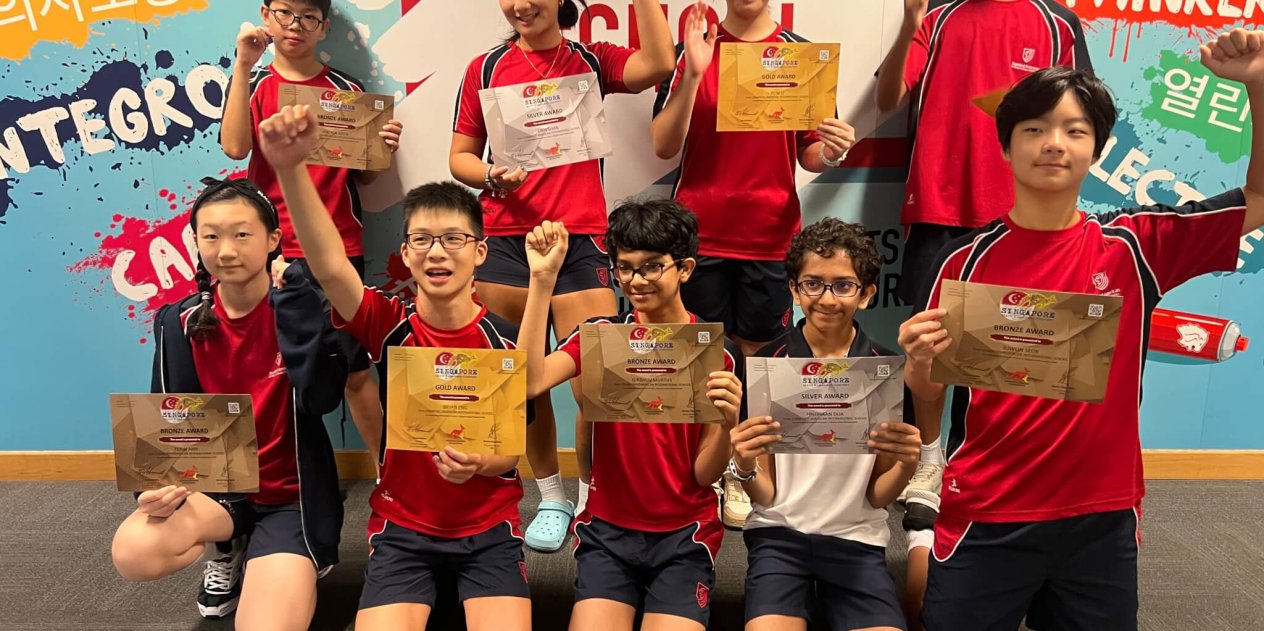
- Stamford American’s Singapore Math Kangaroo Competition Results
- Creative Writing and Storytelling
- Educational Games and Apps
- Outdoor Learning Activities
- Library Visits or Virtual Book Clubs
- Reflection and Goal-Setting
- Integrating Cross-Disciplinary Activities
- Family or Peer Learning Projects
How We Support Academic Continuity at Stamford American
___________
1. Daily Reading Rituals
Establishing a daily reading routine is one of the most effective ways to help children maintain their literacy skills during the summer months. Setting aside just 15 to 30 minutes each day for reading can strengthen comprehension, expand vocabulary, and provide a sense of structure throughout the break. Encourage your child to explore a variety of reading materials, including storybooks, age-appropriate nonfiction, magazines, and graphic novels, to keep their interest and curiosity engaged. Reading together and discussing books can further deepen understanding while making the experience more interactive and enjoyable. Parents can also lead by example. By making time to read themselves, they demonstrate that reading is both enjoyable and valuable, helping children see it as a meaningful activity to prioritize even when school is out.
2. Math in Everyday Life
Math learning can continue naturally throughout the summer when it is incorporated into everyday activities. Simple tasks such as measuring ingredients while cooking, estimating costs during shopping trips, or calculating distances on family outings provide practical and engaging opportunities to reinforce mathematical concepts. Even activities like organizing toys, keeping score in games, or playing board games can help strengthen numeracy and logical thinking skills. By applying math in real-world situations, children gain a deeper understanding of how numerical skills are used in everyday life. These hands-on experiences not only make learning more meaningful but also help maintain confidence and fluency in problem-solving throughout the school break.The impact of developing strong mathematical foundations can be seen in the achievements of Stamford American students in the Singapore Math Kangaroo Competition 2025–2026.
Stamford American’s Singapore Math Kangaroo Competition Results
| Division | Gold | Silver | Bronze |
| Elementary School | 4 | 13 | 24 |
| Middle School | 9 | 10 | 13 |
| High School | 8 | 9 | 8 |
Overall Results: 21 Gold, 32 Silver, and 45 Bronze awards
Outstanding Highlights
Two Grade 4 students achieved Rank 1 in their category, earning the highest country ranking, global score, and school ranking:
- Siu Hwang
- Chihiro Ozaki
These accomplishments reflect the value of nurturing mathematical thinking from an early age. Whether through classroom learning or everyday activities at home, consistent exposure to problem-solving opportunities helps students build confidence, strengthen critical-thinking skills, and develop a deeper understanding of mathematics in meaningful contexts.
- Creative Writing and Storytelling
Creative writing activities, such as journaling and story writing, are excellent ways to strengthen literacy skills while nurturing a child’s imagination. These exercises support vocabulary development, reading comprehension, and written communication, while also giving children an opportunity to express their thoughts, ideas, and emotions. Storytelling activities—whether spoken or written—can further enhance narrative development and sequencing skills, both of which are important foundations for literacy.
To keep the experience engaging, consider introducing writing prompts, creative challenges, or story starters that encourage children to think imaginatively and explore new ideas. By making writing enjoyable and interactive, parents can help children build confidence in their language skills while fostering a lasting interest in self-expression and storytelling.
- Educational Games and Apps
Interactive games and digital learning apps can make educational activities both engaging and effective. Many age-appropriate reading and math apps incorporate puzzles, challenges, and rewards that reinforce key concepts while keeping children motivated. Similarly, board games and card games that involve numbers, words, or strategic thinking can provide valuable learning opportunities in a fun and social setting.
The key is to select activities that strike a balance between entertainment and educational value. Rather than simply keeping children occupied, the best games and apps encourage them to practice critical thinking, reasoning, and problem-solving skills in ways that complement and reinforce what they learn at school.
- Outdoor Learning Activities
Summer provides an ideal opportunity to take learning beyond the classroom and connect it with the outdoors. Everyday experiences can become valuable educational moments, whether children are practicing math through measurement activities, counting exercises, or identifying patterns in nature. Exploring the outdoors encourages curiosity while helping children apply academic concepts in meaningful, real-world settings.
Activities such as observing and recording natural phenomena, collecting and classifying objects, or participating in scavenger hunts that involve sorting and categorizing can strengthen analytical and critical-thinking skills in an engaging way. By combining physical activity with cognitive challenges, these experiences make learning more memorable and enjoyable while helping children recognize that the skills they develop in school are just as relevant in their everyday lives.
- Library Visits or Virtual Book Clubs
Regular visits to the library or participation in virtual book clubs can expose children to a diverse range of reading materials and ideas. Exploring different genres and formats—from fiction and nonfiction to poetry and graphic novels—helps broaden vocabulary, strengthen comprehension, and cultivate a deeper appreciation for reading. This variety also encourages children to discover new interests and develop confidence in their reading abilities.
Discussing books with peers, siblings, or parents can further enrich the experience by fostering critical thinking, communication, and active listening skills. These conversations help make reading a more interactive and social activity rather than a solitary one. For parents unsure where to begin, local libraries are often an excellent resource, offering curated reading lists, seasonal programs, and educational activities designed to keep children engaged, curious, and intellectually stimulated throughout the school break.
- Reflection and Goal-Setting
The opportunity to reflect on progress and set personal goals is just as valuable for children as it is for adults. Taking time to engage in this process with your child can help foster self-motivation, accountability, and a sense of ownership over their learning. For example, you might encourage them to track their reading progress, set weekly learning goals, or maintain a journal to record what they have learned each day.
Be sure to celebrate milestones along the way, no matter how small. Recognizing effort and achievement can boost confidence and encourage children to stay engaged and motivated. Beyond helping to maintain academic skills during the summer, these reflective practices cultivate lifelong learning habits, including independence, goal-setting, and effective planning.
- Integrating Cross-Disciplinary Activities
Activities that combine multiple academic skills can make learning both more engaging and more meaningful. Projects such as designing a simple garden or creating a budget for a pretend store allow children to apply a range of concepts within a single task. As they work through these activities, they practice skills such as measurement, sequencing, calculation, and comprehension, helping them understand how different areas of learning connect and complement one another. These interdisciplinary experiences encourage creativity, critical thinking, and curiosity while providing opportunities for hands-on problem-solving.
- Family or Peer Learning Projects
Collaborative projects provide children with valuable opportunities to apply the literacy and numeracy skills they learn at school in a social, hands-on setting. Working with friends, siblings, or family members on activities such as planning a small event or creating a craft that involves measurement, sequencing, and problem-solving allows them to practice important organizational and communication skills while reinforcing academic concepts.
These projects make learning more engaging by blending creativity with real-world application. While parents can offer guidance and support throughout the process, allowing children to take the lead encourages independence, builds confidence, and fosters a sense of ownership over their learning.
How We Support Academic Continuity at Stamford American
Stamford American International School emphasizes academic continuity, recognizing its importance in supporting long-term student success. The school’s goal is to help students develop and strengthen foundational skills in reading, mathematics, and other core subjects throughout the year. Through a structured and progressive curriculum, children build upon previously acquired knowledge while advancing at each grade level, ensuring they enter every new academic year with confidence and readiness to learn.
To support this growth, teachers provide personalized guidance tailored to individual needs, helping students achieve their full potential. A wide range of physical and digital learning resources further enhances the educational experience, reinforcing comprehension, critical thinking, and problem-solving skills both inside and outside the classroom.
Beyond its curriculum design, Stamford American fosters a culture of engagement and curiosity that encourages students to explore ideas independently and remain motivated beyond the classroom. Collaborative activities, inquiry-based projects, co-curricular programs, and opportunities for self-directed learning work together to cultivate a genuine love of learning, inspiring students to continue exploring and growing even during school breaks.
We would be delighted to help you determine whether Stamford American is the right fit for your child. If you have any questions about our curriculum, school culture, community, academic semesters, or any other aspect of school life, please do not hesitate to contact our admissions team.