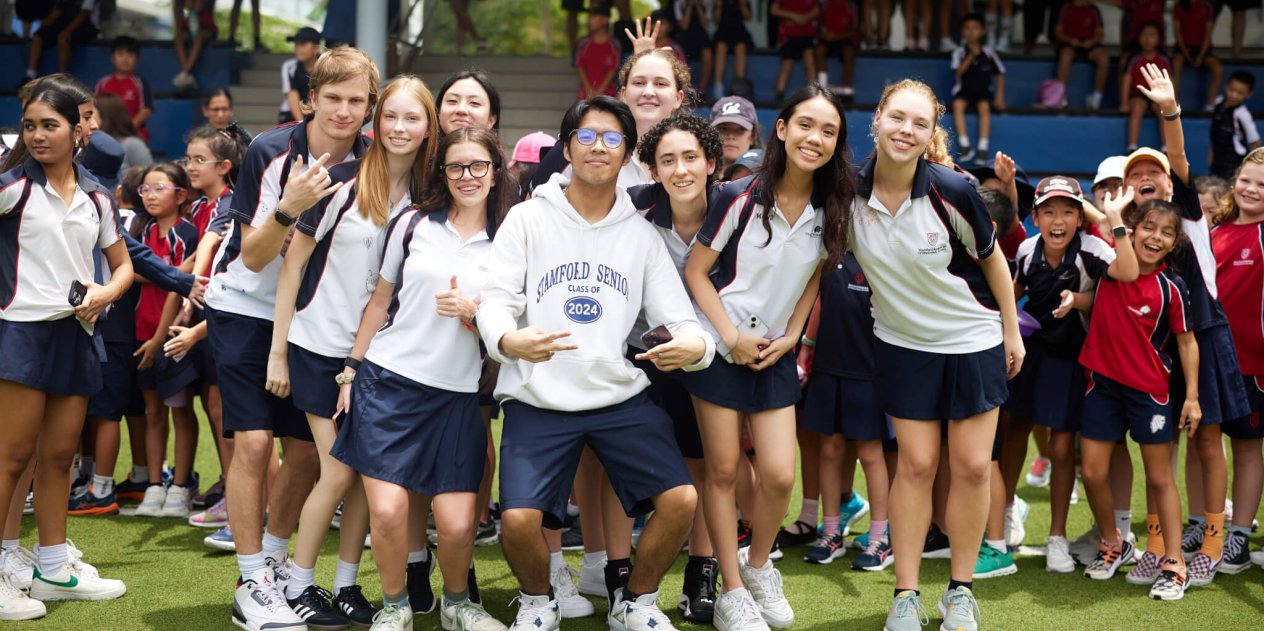
Why a Balanced Student Population Strengthens the International School Experience
Quite often, choosing an international school means choosing a learning environment that reflects the diversity of the wider world. This can be especially true for international schools in Singapore, as the city-state is one that’s cosmopolitan to the core.
Occasionally, parents may wonder about the representation of specific nationalities within a given school community. For example, some parents may be curious about how different cultures are represented within the student body and how the school fosters inclusive interactions among all students.
In practice, school diversity is not simply a consequence of wider transnational movements but something a school can leverage for the benefit of all learners. At the most basic level, it can help children from all backgrounds develop better cultural awareness and communication skills, as well as a wider global outlook. With proper care, a school can build a dynamic learning community where diversity directly supports academic success and long-term intellectual engagement.
Summary of Contents:
Why a Balanced Student Population Strengthens the International School Experience
What “Balance” Means in an International School Community
International schools are defined not just by their curriculum but also by the demographic composition of their communities. A balanced student population means that, as much as is practical, all student cultures are represented. This encourages genuine intercultural interaction and lets students experience perspectives that extend far beyond their own backgrounds, something that is associated with positive educational outcomes by the Organisation for Economic Co-operation and Development (OECD).
Rather than limiting any particular nationality, schools can focus on creating environments where students from different backgrounds interact and learn from one another. Classrooms with a rich mix of cultures naturally become spaces where students exchange customs and viewpoints in ways that support everyone’s learning and growth. With this perspective, we can see that balance is less about numbers and more about fostering beneficial diversity.
Cultural Representation Without Any Dominant Perspective
While institutions like Stamford American International School serve diverse communities, strong international schools encourage students to engage with a wide range of perspectives rather than a single dominant viewpoint.
A student population where many nationalities are represented helps create this balance. For example, a cultural background that represents about 1-in-10 of the community may contribute meaningfully to the overall culture of the school without defining it. Whatever the ratio of communities, a well-managed institution can still ensure that everyone maintains connections to their heritage even as they pursue academic excellence and participate actively in a wider global community.
How Diverse Classrooms Improve Social Learning
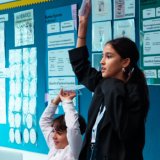
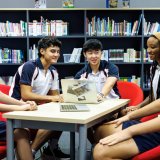
Being in a multicultural environment provides a kind of social education that cannot be substituted through typical classroom learning in a homogenous setup. Students will find that group activities, collaborative projects, and classroom discussions are opportunities, not just for surface-level cultural exchanges but to question their own culture-bound assumptions of the wider world.
In a diverse classroom, students learn firsthand how to effectively negotiate and advocate for ideas and adapt communication styles to bring points across to peers with different ways of thinking. In the process, they also become more empathetic and perceptive, helping them to become valuable members of whichever communities they become a part of.
The benefits extend beyond interpersonal relationships. Exposure to multiple viewpoints necessarily encourages deeper reflection and may expand a child’s approach to problem-solving. Students learn firsthand that many challenges are not cut-and-dried and can, indeed, be approached in different ways.
The concept of diversity leading to better social learning and collaboration is borne by decades of research. Notably, the UNESCO Global Education Monitoring Report emphasizes that diverse learning environments support inclusive education, promote mutual understanding, and help learners appreciate and respect differences..
Academic Advantages of International Classrooms
Cultural diversity not only shapes social development; it also directly strengthens academic learning. A recent UK study published in the journal Learning and Teaching found that students who interact with peers from different countries often develop stronger higher-order thinking and social skills, as they learn how to compare and advocate for ideas and evaluate multiple viewpoints.
In classroom discussions and projects, students will eventually encounter different educational traditions and learning approaches. Some cultures may emphasize spirited debate while others focus on consensus or independence. Exposure to these varied methods can encourage intellectual flexibility. After some time, students may even begin to organically synthesize approaches to problem solving by blending their own ideas with those from peers from other cultures.
This diversity is all good for the students. Another recent study published in the journal Frontiers in Psychology and referenced by the US National Institutes of Health echoes the results of the UK study mentioned above, suggesting that diverse classrooms often foster stronger critical thinking and more robust classroom discussions, contributing significantly to improved learning outcomes. As the world continues to become smaller, students from multicultural schools may be in a better position to innovate and lead wherever they may find themselves later on.
Preparing Students for a Global Future
Students today will eventually enter a highly internationalized world. Universities, workplaces, and professional networks are already spanning multiple borders and cultures, and this trend is doubtlessly something that will deepen with time. Schools that reflect this ongoing global reality are in a position to help young learners prepare for these environments early on.
International classrooms today are simulating the dynamics students will encounter later in life as they go into university or pursue careers. Cultural celebrations, language exposure, and shared learning experiences inside and outside of the classroom reinforce the importance of mutual respect and prepare students with a mindset that is ready to meet future, multicultural challenges.
What Parents Should Look for in an International School
When evaluating international schools, parents naturally consider curriculum, facilities, and typical academic outcomes. While these factors are important, the composition of the student community also deserves some attention, especially given all that has been discussed so far.
A balanced international school environment typically has these characteristics:
- Meaningful representation from a balanced cross-section of different nationalities
- No single background dominates discourse within the student population
- Plentiful opportunities for healthy cultural exchange through school-sanctioned activities
- Inclusive policies that support diverse families
Parents may also wish to ask schools how they encourage intercultural learning and the opportunities that students are given to effectively collaborate across cultures. These subtle elements often shape a child’s long-term outlook just as much as formal lessons.
How Stamford American Cultivates a Truly Balanced School Community
At Stamford American International School, the student community reflects the diversity of the global international landscape. Thanks to Stamford American’s active approach to fostering diversity, equity, and inclusion, all students can expect to positively contribute to the richness of the school’s cosmopolitan experience.
Within this setting, students from all backgrounds can build friendships with peers from different walks of life while maintaining vital connections to their own heritage. Cultural celebrations, collaborative projects, and bilingual and multilingual learning opportunities at Stamford American all support meaningful interaction that further enriches each child’s individual learning experience.
Through its inclusive community culture and unwavering commitment to excellence, the school helps students develop the intercultural understanding needed to thrive in an increasingly connected world. Parents interested in learning more about the school’s global learning approach can explore the Stamford American website or speak with the admissions team to discover how else the school supports learners of all backgrounds.